
European Portuguese Slang: What Tuga, Fixe and Bué Really Mean
Published on 2026-01-23
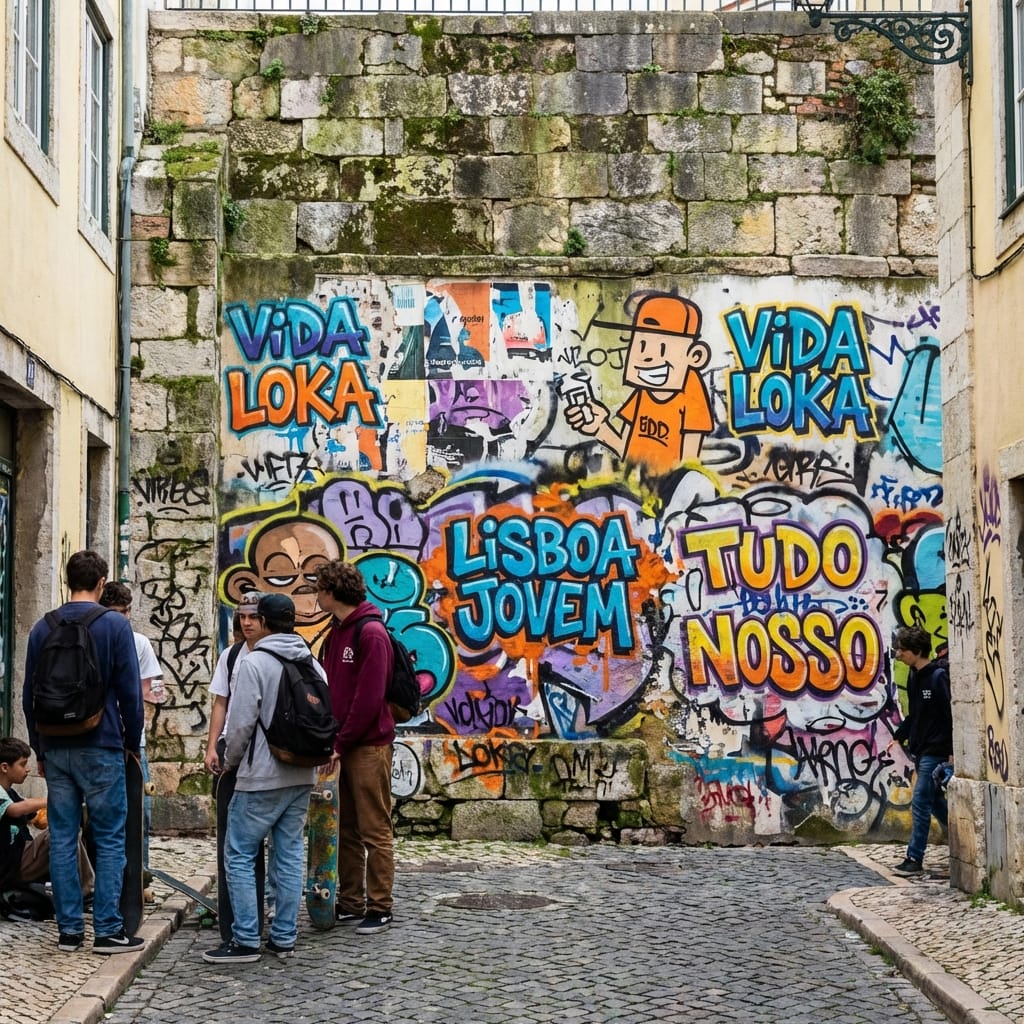
Your textbook taught you "Isto é muito bom" (this is very good). Then you spend a Friday night in Bairro Alto and nobody says anything of the kind. Instead you hear "Bué fixe!", "Bora, malta!" and a lot of sentences ending in pá. Same language, different universe.
Slang is where European Portuguese stops being a school subject and starts being how people actually talk. You don't need to use all of it, and a few words are best kept for friends. But recognizing them is the difference between following a conversation and smiling politely through it. Here are the words you'll hear most in Portugal, what they really mean, and when it's safe to try them yourself.
What Does "Tuga" Mean in Portuguese?
Tuga means Portuguese: a Portuguese person, or something typically Portuguese. It's a clipped form of português, by way of the older nickname portuga.
- "Ele é tuga." (He's Portuguese.)
- "Isso é tão tuga!" (That's so Portuguese!)
- "A malta tuga em Londres" (the Portuguese crowd in London)
The word began as a disparaging nickname, and some older people still hear an edge in it. Today, though, most Portuguese people use it about themselves, with pride, affection or self-mockery, especially online, in football chants and among emigrants abroad. As a foreigner, using tuga about something you love ("o pequeno-almoço mais tuga de sempre", the most Portuguese breakfast ever) is fine. Calling a stranger tuga to their face is less wise.
Fixe: The Word for "Cool"
Fixe (sounds like "feesh") is the all-purpose word for cool, nice or great. It works for people, plans, places and things.
- "O concerto foi fixe." (The concert was great.)
- "Ela é muito fixe." (She's really nice.)
If you learn one slang word, make it this one. Note that Brazilians say legal for "cool". In Portugal, legal just means legal, as in "allowed by law".
Bué: "Very" and "Loads"
Bué means very, or a lot of. It reached Lisbon from Angola, via Kimbundu, and it's now everywhere among younger speakers.
- "Estou bué cansado." (I'm so tired.)
- "Havia bué de gente." (There were loads of people.)
Bué fixe (really cool) is practically one word. It's informal, so don't put it in an email to your landlord, but you'll hear it constantly.
Pá: The Word at the End of Every Sentence
Pá is a filler, a bit like "man" or "mate", tacked onto the start or end of a sentence. It comes from rapaz (boy) but is used with anyone.
- "Não sei, pá." (I don't know, man.)
- "Pá, que dia!" (Man, what a day!)
It makes a sentence sound relaxed and a little exasperated. A Portuguese prime minister was famously caught on microphone saying "Porreiro, pá!" (great, man!) at an EU summit, which tells you how deep this one runs.
Gajo, Gaja and A Malta: Talking About People
Gajo means guy, and gaja means girl or woman. They're the standard casual way to refer to someone among friends: "Quem é aquele gajo?" (Who's that guy?). Gajo is mostly harmless, but gaja can sound disrespectful, so leave it to native speakers until you have a feel for it.
A malta means the gang, your crowd, or simply "everyone": "A malta vai jantar fora." (The gang's going out for dinner.) Bora!, short for vamos embora (let's go), usually follows it.
Porreiro, Bacano and Giro: Ways to Say "Nice"
- Porreiro: great, solid, decent. Slightly old-school. "Ele é um gajo porreiro." (He's a decent guy.)
- Bacano: cool, nice, usually about a person. "Que tipo bacano!" (What a cool guy!)
- Giro / gira: cute, pretty or fun, for people, places and plans. "Lisboa é uma cidade muito gira." (Lisbon is a lovely city.)
Advertisement
Chato and "Que Seca!": When Things Are Boring
Chato describes anything annoying or boring: a film, a meeting, a person who won't stop talking. "Que seca!" (literally "what a drought!") means "what a bore" or "what a drag".
- "A reunião foi uma seca." (The meeting was so boring.)
- "Não sejas chato!" (Don't be a pain!)
Desenrascar: The Most Portuguese Word of All
Desenrascar means to get yourself out of a mess by improvising, with whatever you happen to have. The noun, desenrascanço, is often described as a national skill: fixing the boiler with a hairpin, finding a table for twelve at ten minutes' notice, making the paperwork work somehow.
- "Não te preocupes, eu desenrasco-me." (Don't worry, I'll figure it out.)
- "Desenrasca-te!" (Sort yourself out!)
Use it about yourself and the Portuguese will assume you've been here for years.
Ya, Tá-se Bem and Other Youth Slang
Spend time around Lisbon teenagers and you'll hear ya (yeah), tá-se bem (it's all good, no worries) and cota (an older person, often a parent). These are firmly informal. Recognize them, and use them with a smile.
European Portuguese Slang at a Glance
| Slang | Meaning | Example |
|---|---|---|
| tuga | Portuguese (person or thing) | Isso é tão tuga! |
| fixe | cool, great | Foi fixe. |
| bué | very, loads | Bué de gente. |
| pá | man, mate (filler) | Não sei, pá. |
| gajo / gaja | guy / girl | Quem é aquele gajo? |
| a malta | the gang, everyone | A malta vai sair. |
| bora | let's go | Bora, malta! |
| porreiro | great, decent | Porreiro, pá! |
| chato | annoying, boring | Que chato! |
| que seca | what a bore | Foi uma seca. |
| desenrascar | to improvise a way out | Eu desenrasco-me. |
| tá-se bem | it's all good | Tá-se bem, não faz mal. |
Is Slang Different in Porto?
Yes, a little. Bué is more of a Lisbon word, and Porto has its own flavor: the all-purpose exclamation carago, for one. Even ordering a beer changes: a small draught beer is an imperial in Lisbon and a fino in Porto, as our guide to ordering beer in Portugal explains.
Quick Questions
What does "tuga" mean?
Tuga is slang for Portuguese, a person or anything typically Portuguese. Once a mild insult, it's now mostly used by Portuguese people about themselves, with pride or humor.
Is Brazilian slang understood in Portugal?
Often, thanks to Brazilian TV and music, but it marks you as having learned Brazilian Portuguese. Legal (cool) and cara (dude) aren't used this way in Portugal. Our European vs. Brazilian Portuguese guide covers more of the differences.
Is "gajo" rude?
Not among friends, where it's standard. In formal settings, use senhor or rapaz instead, and be more careful with gaja, which can sound disrespectful.
Should I use slang as a beginner?
Use a little: fixe, bué and bora are safe and get a smile. Save the rest until you know the people you're talking to.
Want to meet people before you start slinging slang? Our free Introductions lesson gets you through the first conversation, with native European Portuguese audio.
Advertisement
Start Learning Today
Join PortuTalk to unlock interactive lessons, listening exercises, and more.
Sign up for FreeNo credit card required.